
· Sarah · Small business marketing · 16 min read
Why move from Etsy to Shopify? The benefits for small businesses
Wondering if you should move from Etsy to Shopify? Here's why making the switch could be a great next step for your small business.
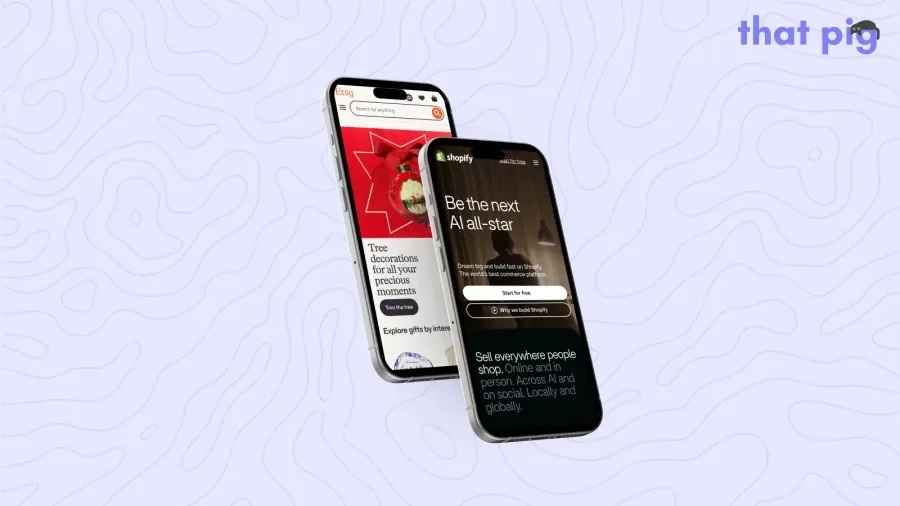
When you’re first setting up your online shop, Etsy is undeniably a great platform to get you started. All you have to do is sign up, pick a store name, add your bank details and your first listing, then voilà! Your products are there to be discovered by shoppers all over the world.
For small business owner Anna, it was a great way to prove to herself that there was a customer base out there for her illustrations. But as Gal + Goose grew, the growing pains that come with relying on a marketplace like Etsy started to show.
Maybe you recognise them yourself:
- The admin of listing and then relisting products when they expire.
- A chunk of your revenue is going straight to Etsy instead of you. You’re paying for each listing, then giving a percentage of every sale back to them.
- Your products are sharing screen space with competitors or AI-generated listings, and there’s nothing you can do about it.
Now, I’m not saying that you shouldn’t sell on Etsy. It’s a great platform for people to get started. But there may well come a time when moving your store to a platform like Shopify opens up more room for you to grow.
So, how is Shopify different? And what are the benefits?
Shopify is a platform that lets you create your own website and online shop for your business. You get control over the look and feel, can plug in apps or tools to help with your marketing, and manage your whole product catalogue in one place.
It’s a platform built specifically with ecommerce businesses in mind, and is used by independent businesses right through to big brands like Gymshark.
The easiest way to think about the two:
- With Etsy, you’re basically renting a virtual shelf in someone else’s shop.
- With Shopify, it’s a shop all of your own.
And that difference can have a pretty big impact on how you grow your small business.
1. More of your hard-earned money stays in your pocket
Let’s start with the money, because when you’re running a small business, every penny counts.
One of the great things about Etsy is that you don’t need to pay a monthly subscription just to start selling. But what you might not realise when you’re getting started is how many different fees can come out of each sale.
For UK sellers, Etsy charges:
- 15p listing fee: Every time you list a product, and again when it sells or needs renewing after four months.
- 6.5% transaction fee: Taken from the total order value, including delivery.
- 4% + 20p payment processing fee: For processing your customer’s payment.
- 0.48% regulatory operating fee: Another percentage taken from your sales.
And depending on how someone finds your product, you could also be paying an additional 12–15% in Offsite Ads fees.
That’s quite a lot to keep track of!
Shopify works a little differently.
With Shopify Basic, you pay £25 a month for your online store, plus 2% + 25p for each online card payment. You don’t pay to list products, and they don’t expire after four months.
So, which one actually works out cheaper?
Etsy vs Shopify fees: Let’s do the maths
Imagine you’re selling prints, gifts or handmade products for an average of £25 per order.
Here’s what your monthly platform costs could look like:
| Monthly sales | Etsy fees | Shopify fees | Potential saving |
|---|---|---|---|
| £500 (20 orders) | £61.90 | £40.00 | £21.90 |
| £1,000 (40 orders) | £123.80 | £55.00 | £68.80 |
| £2,000 (80 orders) | £247.60 | £85.00 | £162.60 |
Pricing correct as of November 2026.
That’s potentially £1,951.20 saved over a year if you’re making £2,000 in sales every month.
Not bad, is it?
Of course, these are example figures. They assume one listing fee per order, no delivery charges, no advertising fees and no additional Shopify apps. VAT on applicable platform fees isn’t included either.
And there’s one more thing worth remembering: Shopify doesn’t come with Etsy’s built-in audience. You may need to invest more time or money into getting customers to your website.
But if you’re already bringing in customers through Instagram, markets, word of mouth or some form of marketing, it’s worth asking yourself if you really need to keep paying Etsy a percentage of every sale.
My advice? Take a look at your Etsy fees from the last three months and work out what you’d have paid on Shopify instead. It’s a simple exercise that could help you decide whether it’s time to make the move.
After all, that money could be going towards new equipment, packaging, marketing or even just paying yourself a little more!
2. Your products get the attention they deserve
Imagine you’ve spent hours creating a beautiful new illustration. You’ve perfected the design, taken lovely product photos, written your description and finally got it listed on Etsy.
Someone finds your print, clicks through to have a closer look and… Etsy starts showing them similar products from other sellers. Some might be cheaper. Some might be mass-produced. Some might even be AI-generated.
Not ideal when you’ve put so much time and care into creating something original.
That’s because Etsy is a marketplace. Its goal is to help people find something they want to buy, even if that means sending them to another seller.
With your own Shopify website, things work differently.
When someone lands on your product page, they’re looking at your products, your brand and your business.
You can recommend other items from your own collection, show off your bestsellers or encourage shoppers to explore more of what you make. No competing listings popping up alongside yours.
For small business owners and makers, this is a particularly big benefit. Your customers can see the thought, creativity and effort that goes into your work, rather than comparing it with dozens of similar-looking products based on price alone.
3. You can make your online shop feel like YOU
One of my favourite things about small businesses is that they’re all so different.
You’ve got your own personality, your own style and your own reasons for doing what you do. So why should your online shop look almost exactly like everyone else’s?
Etsy gives you a few ways to personalise your storefront, but ultimately you’re working within the site’s layout. With Shopify, you’ve got much more freedom to create a website that actually reflects your brand.
You can choose your colours, fonts, layout and imagery. You can organise your products into collections that make sense for your customers, and create pages that tell people a bit more about you.
For example, if you’re an illustration business like Gal + Goose, you might want to:
- Show off your latest collection of prints on your homepage.
- Share the story behind your illustrations and where your ideas come from.
- Create a gallery of your work.
- Add a page for commissions or wholesale enquiries.
- Start a blog to share new launches, behind-the-scenes updates or inspiration.
You don’t have to do all of this at once, by the way!
Even a simple Shopify website with a homepage, a few product collections and an About page can give customers a much better sense of who they’re buying from.
And that’s important, because people don’t always buy from small businesses just because of the product. They buy because they like the person, the story and the brand behind it.
For Anna at Gal + Goose, this was one of the biggest benefits of making the move from Etsy to Shopify.
By getting my website set up on Shopify, I’ve actually been able to turn my small business into a brand - I’ve got a dedicated place to tell my story, build a community and manage my product line in a more cost-effective way. — Anna, founder of Gal + Goose
And that’s the difference between simply having somewhere to sell your products and having a space to grow your business into something bigger.
4. You get to know your customers better
Here’s something that can make a huge difference to your small business marketing: understanding how people find you and what makes them buy.
Etsy gives you some useful information about your shop, like how many people are visiting and which products are selling. But Shopify can give you a much more detailed picture of what’s happening on your website.
For example, you can find out:
- Where your customers are coming from. Are they finding you on Google, Instagram, Pinterest or somewhere else?
- Which products are getting the most attention. Are people looking at certain products but not buying them?
- What’s actually driving sales. Is that Instagram post you spent ages creating bringing in customers?
- Are people coming back? Are you building a loyal customer base or relying mostly on first-time purchases?
You can also connect tools like Google Analytics to understand how people use your website. Now, I know the word analytics can sound a bit intimidating if marketing isn’t your thing.
But you don’t need to become a data expert to make use of it.
Let’s say you notice that lots of people are visiting one of your product pages, but hardly anyone is buying.
That might be a sign that your product photos need improving, your delivery information isn’t clear enough or your price needs a second look.
Or perhaps you discover that Pinterest is bringing far more customers to your website than Instagram.
That’s useful to know when you’re deciding where to spend your precious marketing time!
The point is, the more you understand your customers, the easier it becomes to make decisions that help your business grow.
5. You can start building a customer base that’s actually yours
Getting someone to buy from your small business for the first time is brilliant.
Getting them to come back again? Even better.
But here’s the thing about selling on Etsy: customers are shopping on Etsy, and they might not always remember which individual business they bought from.
When you’ve got your own website, you have more opportunities to build a direct relationship with your customers.
One of the simplest ways to do this is through email marketing.
You can add an email sign-up form to your Shopify website so people can choose to hear from you about new products, upcoming launches or special offers.
Then, when you’ve got something exciting to share, you can tell them directly.
Imagine you’ve just launched a new collection.
Rather than hoping your previous customers happen to come across them on Etsy, you could send an email to people who’ve signed up to hear from you.
You could even give subscribers a little sneak peek before the collection goes live. And despite what you might think, you don’t need thousands of email subscribers for this to be worthwhile.
A small list of people who genuinely love what you sell can be far more valuable than a huge audience who barely notices your posts.
Just remember to get the right consent before sending marketing emails, and make it easy for people to unsubscribe.
6. You’re less reliant on Etsy’s rules and algorithms
Here’s something that’s easy to forget when you’re selling through a marketplace.
You don’t get to make the rules. Etsy decides how its search works, what sellers can list, how its fees are structured and what the shopping experience looks like.
And those things can change.
If Etsy updates its search algorithm, your products might suddenly become harder for customers to find. If it changes its fees, your profit margins could take a hit.
There’s also the wider issue of what you’re sharing a platform with.
Etsy has faced criticism over mass-produced products, AI-generated designs and controversial listings, including merchandise associated with the US detention facility nicknamed “Alligator Alcatraz”.
As a small business owner, you might have strong feelings about the kinds of products or businesses you want your brand associated with. But on a marketplace, you have limited say over the wider environment that your products appear in.
Having your own Shopify website gives you much more control over how your business is represented.
Of course, Shopify has rules too, and you’ll still rely on platforms like Google and Instagram to help people find you. But you’re no longer relying on a single marketplace for your entire online presence.
And that gives you a little more breathing room.
7. You’ve got more opportunities to grow your business
When you’re just starting out, your main goal might be to make a few sales and see whether people like what you’re creating.
But as your business grows, your ambitions might grow with it.
Maybe you want to introduce new product ranges, start offering commissions, sell wholesale or reach customers in different countries.
Perhaps you want to get more people finding your business through Google, rather than relying on social media or Etsy search.
This is where having your own website can really start to pay off.
With Shopify, you can build your website around your business goals. For example, you could create helpful blog posts that answer questions your potential customers are searching for.
If you sell illustrated prints, you might write articles like:
- How to choose the perfect print for your living room
- Five ways to style a gallery wall
- How to choose a frame for your art prints
These are all opportunities for people to discover your business through Google, even if they’ve never heard of you before.
This is called SEO (search engine optimisation), which is really just the process of making your website easier for search engines and ultimately visitors, to find and understand.
It’s not an overnight fix, but over time, helpful content and well-optimised product pages can bring new customers to your website without you having to pay for every click.
And unlike an Etsy listing, your website gives you the freedom to build a whole library of useful content around your products.
Want to see what moving from Etsy to Shopify looks like in practice?
I helped Anna at Gal + Goose make the move from Etsy to her very own Shopify website, giving her a space to showcase her illustrations and build her brand beyond the marketplace.
Read the Gal + Goose case study to see how we approached the move from Etsy to Shopify.
But does all this mean you should ditch Etsy completely?
Not necessarily!
I don’t think there’s anything wrong with using Etsy and Shopify together, particularly while you’re getting your own website established.
Etsy still has a huge advantage: people are already there looking for things to buy.
When you launch a Shopify store, you don’t automatically get that traffic. You’ll need to put some effort into getting your website in front of potential customers.
That might mean sharing your products on social media, working on your SEO, building an email list or experimenting with paid advertising.
And if Etsy is already bringing you consistent sales, there’s no reason to switch that off overnight.
Instead, you could start by setting up your Shopify website alongside your Etsy shop.
Keep your Etsy listings live while you work on getting people to discover your new website through your own marketing. Just be mindful of Etsy’s rules around directing marketplace transactions elsewhere to avoid its fees.
The aim isn’t necessarily to stop using Etsy. It’s to give your business more options, more independence and more room to grow.
How to move from Etsy to Shopify (without making it a massive project)
If you’re thinking about making the move, the good news is that you don’t need to build a complicated website from scratch. Shopify has ready-made website themes, and you don’t need to know how to code to get a basic online shop up and running.
Here’s how I’d approach it:
Step 1: Work out what you need from your website.
Before you start picking colours and fonts, think about what you actually want your website to do.
Are you mainly looking to reduce fees? Build your brand? Attract more customers through Google? Start email marketing?
Knowing what matters most will help you avoid spending time and money on features you don’t really need.
Step 2: Choose a Shopify plan and theme.
Start with a plan that suits the size of your business and pick a theme that works well for your products.
You don’t need to pay for a fancy custom design to get started. Shopify’s free themes can be a great option for small businesses.
Step 3: Move your products across.
You can export your Etsy listings and use Shopify’s import tools or a suitable migration app to help move your product information across.
You’ll still want to check everything carefully, particularly your images, product descriptions, prices and variations.
Step 4: Set up the important bits.
Before you launch, make sure you’ve got your payment methods, delivery options, returns information and contact details sorted.
And don’t forget to test the checkout yourself!
Step 5: Make it easy for people to find you.
Give your product pages clear, descriptive titles and write descriptions that explain what you’re selling in a way that makes sense to your customers.
Connect Google Search Console so you can monitor how your website appears in Google, and set up analytics to understand your visitors.
Step 6: Start telling people about your new shop.
Share your website on your social media profiles, add it to your bio and include it on your business cards, packaging and other marketing materials.
If you’ve already got an email list with the right permissions, let your subscribers know too.
And remember, you don’t need everything to be perfect before you launch.
Start with a website that works well, looks good and makes it easy for people to buy your products. You can always build on it as your business grows.
So, should you move from Etsy to Shopify?
If you’re brand new to selling online, Etsy might still be exactly what you need. It’s accessible, relatively easy to get started with and gives you access to an existing audience of shoppers.
But if you’ve been selling for a while, you’re getting regular orders and you’re starting to feel a bit restricted by what Etsy allows you to do, it might be time to think about your next step.
Moving to Shopify isn’t a magic fix that will suddenly double your sales. You’ll still need to work on your marketing, attract visitors and give people a reason to buy from you.
But what it does give you is a space that’s built around your business, rather than someone else’s marketplace.
You can tell your story properly, understand your customers, build relationships with them and create something that can grow alongside your ambitions.
And the sooner you start building that independent presence, the sooner you can start seeing the benefits.
Etsy might have been the perfect place to start. But it doesn’t have to be where you stay.
Need a hand making the move from Etsy to Shopify?
If you’re thinking about setting up your own Shopify website but don’t know where to start, don’t worry. You don’t need to figure it all out on your own.
At that pig, I help small businesses get to grips with their marketing, build their online presence and make better use of the tools available to them.
Whether you need freelance marketing support to plan your move from Etsy to Shopify, improve your Shopify SEO or work out an ecommerce marketing plan to attract more customers, I can help you focus on what makes sense for your business.
No unnecessary jargon, no overcomplicated marketing plans. Just practical, friendly support to help your small business grow.